Every morning, millions of us check the weather before heading out the door. We glance at our phones, hear a forecast on the TV or radio, or see an alert scroll across a screen. Few of us stop to ask: Where does this information actually come from?
The answer, more often than not, is the National Oceanic and Atmospheric Administration (NOAA).
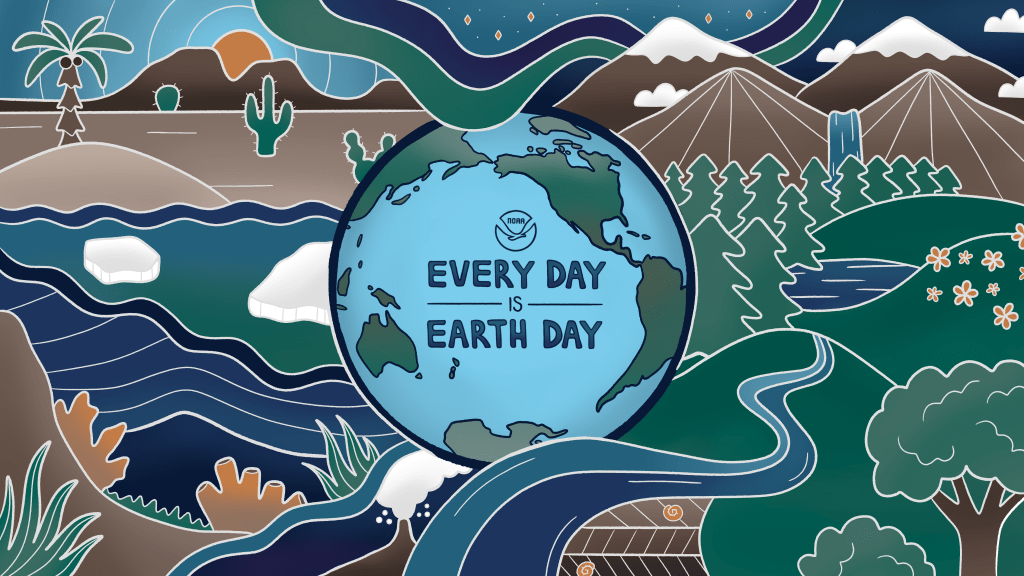
When Earth Day was founded in 1970, it was a national call to clean the air, protect the water, and value science. That same year, NOAA was also established, with a mission to understand and predict changes in climate, weather, oceans, and coasts.
Since then, NOAA has quietly grown into one of the most vital science agencies on the planet. But today, amid proposed budget cuts and increasing political pressure, its foundational role in protecting public safety is under threat.
This Earth Day, as we reflect on 54 years of progress and setbacks, it’s worth pulling back the curtain on what NOAA does—and what we stand to lose if its work is diminished.
Here are five ways NOAA keeps you safer every single day—whether you realize it or not.
1. NOAA’s forecasts power the planes you fly on
Before pilots take off, they rely on weather briefings that are based on NOAA data. From turbulence prediction to jet stream analysis, NOAA provides the aviation industry with critical atmospheric information to keep flights safe and efficient.
For example, the Aviation Weather Center, run by NOAA, delivers real-time alerts about conditions that could endanger aircraft, such as icing, thunderstorms, and volcanic ash.
Cutting NOAA’s budget doesn’t just impact storm forecasts—it could mean bumpier, riskier skies and more canceled or rerouted flights.
2. NOAA is behind flash flood warnings that save lives
When a flash flood warning appears on your phone, it’s the result of a complex chain of observation and modeling, much of which is operated or supported by NOAA. Using radar, satellite data, and river gauges from the National Weather Service’s River Forecast Centers, the National Weather Service (NWS) issues life-saving alerts when water rises fast.
A 2023 study from the National Institute of Building Sciences showed that every $1 spent on early warning systems saves $6 in disaster recovery costs. Those alerts start with NOAA.
3. NOAA satellites boost weather forecast accuracy
Many people are unaware that the weather models used by their favorite app are often fed by NOAA’s satellite constellations, such as the GOES-R Series and the Joint Polar-Orbiting Satellite System (JPSS). These eyes in the sky don’t just monitor clouds; they track wildfires, observe lightning and ocean temperatures, and detect moisture in the atmosphere using techniques such as radio occultation.
But it’s not just satellites that enhance forecast accuracy. Upper-air radiosonde observations—with weather balloons launched twice daily by the NWS from dozens of sites—are the second-most important data source for feeding forecast models, behind satellites. Recent reductions in these balloon launches could subtly degrade forecast accuracy, especially during rapidly evolving weather patterns when precise vertical profiles of the atmosphere are most crucial.
SEE ALSO: How NOAA satellites help us stay ahead of severe weather season
Private companies, including those that produce forecasts on popular apps, rely on NOAA infrastructure to power their own forecasts and warnings. Without that data? Your daily local forecast may not be as accurate, which raises concerns about safety during the severe weather season.
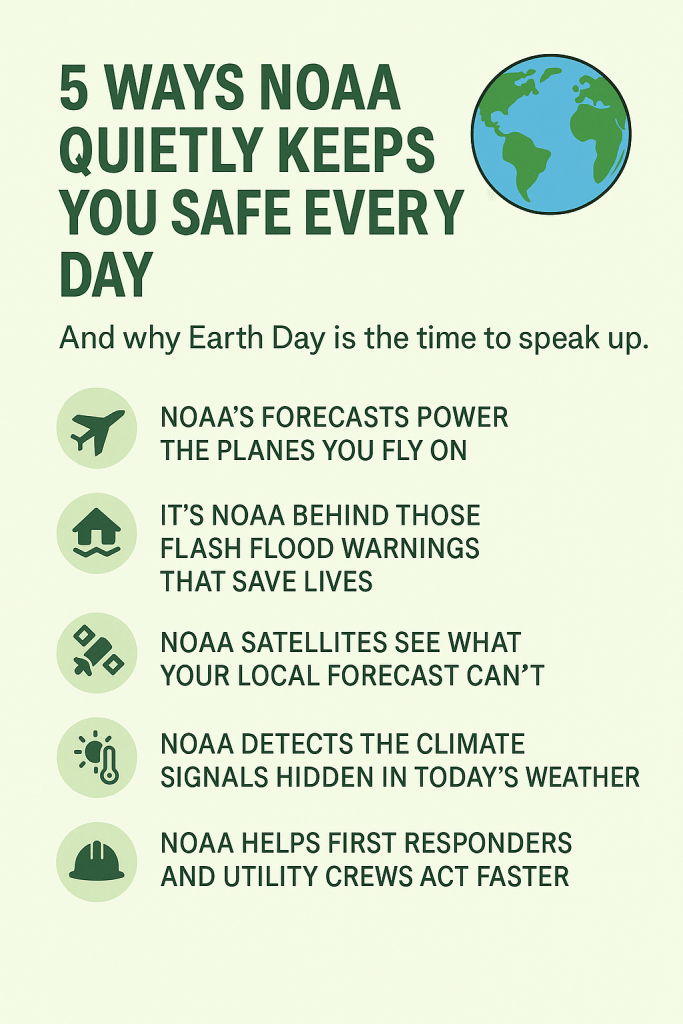
4. NOAA detects the climate signals hidden in today’s weather
Climate change can feel abstract—until its fingerprints appear in extreme heat, prolonged drought, or record-breaking rainfall. NOAA’s Climate Program Office helps identify long-term trends and emerging signals through tools like the U.S. Climate Outlooks and the U.S. Climate Resilience Toolkit.
And the public is paying attention: According to Yale’s Climate Opinion Maps, 72% of Americans believe global warming is happening, and 71% are concerned about the harm it may cause to future generations. More than half, or 61% of people surveyed, believe climate change is already affecting the weather.
However, without NOAA’s continuous monitoring, measurements of what’s happening, how fast it is happening, and predictions of what will happen in the future would be significantly limited.
5. NOAA helps first responders and utility crews act faster
From hurricanes to wildfires to grid strain during extreme heat, NOAA provides impact-based decision support to emergency managers and first responders. Their forecasts guide evacuations, help deploy resources faster, and inform power grid planning.
This behind-the-scenes work, from the Storm Prediction Center and the National Hurricane Center to NWS Incident Meteorologists, is crucial during life-threatening events. When minutes count, NOAA’s data drives warnings that save lives.
Why is NOAA needed now more than ever?
When 20 million Americans took to the streets for the first Earth Day in 1970, they weren’t just demanding clean air and water; they were demanding accountability, transparency, and science-driven action. NOAA was born from that movement, and for over half a century, it has served that mission.
Earth Day is often about what we can do for the planet—planting trees, cleaning up parks, and reducing waste. But this year, let’s also protect the systems that protect us.
Cutting NOAA’s funding doesn’t just silence meteorologists and climate scientists—it weakens forecasts, early warnings, and every bit of climate knowledge we need to build a safer, more resilient future.
“The 2026 budget passback plan calls for eliminating NOAA Research, the scientific backbone that keeps weather forecasts, alerts, and warnings accurate and effective. This would have disastrous consequences,” the American Meteorological Society (AMS) stated.
Read the AMS’ complete statement in partnership with the National Weather Association →
Because in the face of extreme weather and escalating climate risks, good forecasts don’t just make life more convenient. They save lives, and they’re part of the legacy Earth Day helped to build.
A call to action
Want to make a difference this Earth Day? Support the science that supports you. Get involved with NOAA’s citizen science projects or explore Earth Day actions you can take to help the theme “Our Power, Our Planet.”
And most importantly, let your representatives know that investing in climate science and NOAA is investing in safety, resilience, and the well-being of future generations. The free 5 Calls app makes contacting your representatives in Congress quick and simple—right from your phone. Do you need to find out who represents you?
Continue reading: NOAA cuts, climate risks & forecasting in the crosshairs
Want to explore more about how proposed budget cuts could impact forecasting, public safety, and climate resilience? These articles dive deeper:
- Trump budget proposal slashes funding for National Weather Service, NOAA, USA Today – Read the article
- Fired, rehired and fired again: NOAA employees caught in limbo, PBS NewsHour – Read the article
- Trump Cuts Threaten Key NOAA Work to Improve Weather Forecasts and Monitor Climate, Scientific American – Read the article
- NOAA budget cuts could impact hurricane forecasts, climate monitoring, CNN Climate – Read the article
- Hurricane season forecasts and local warnings may suffer under NOAA cuts, Pensacola News Journal – Read the article
- Weather balloon launch cuts: An honest look at how it should impact forecasts, The Eyewall – Read the article
 Meghan Mussoline