
According to the World Meteorological Organization (WMO), only 23% of meteorology, hydrology, and atmospheric sciences professionals worldwide are women. In the United States, this figure drops to a mere 12%.
Representation matters, as underscored by scientific organizations, including the WMO. I can attest to the impact of seeing female meteorologists presenting weather forecasts on TV, which significantly influenced my decision to pursue a career in meteorology. For Women’s History Month, I wish to spotlight the achievements of a trailblazing meteorologist whose career has taken her far, both in terms of mileage and professional scope.
Julie Malingowski’s journey into meteorology began unexpectedly.
“I was really afraid of storms when I was young and that fear turned into a fascination in grade school,” Malingowski said.
“I developed an interest in becoming a meteorologist when I was 10 years old,” she went on to explain. “My oldest sister moved to North Carolina, and I was afraid that a hurricane would impact her. I tracked all of the hurricanes thinking that I could help to keep her safe.”
She earned a Bachelor of Science in Meteorology from Penn State in 2007 before obtaining her Masters in Atmospheric Science and Meteorology at the University of Alaska Fairbanks in 2010. Her career journey has led her through several states, including Colorado, Utah, Idaho, and a brief tenure in Missouri.
High-pressure, but rewarding role in meteorology
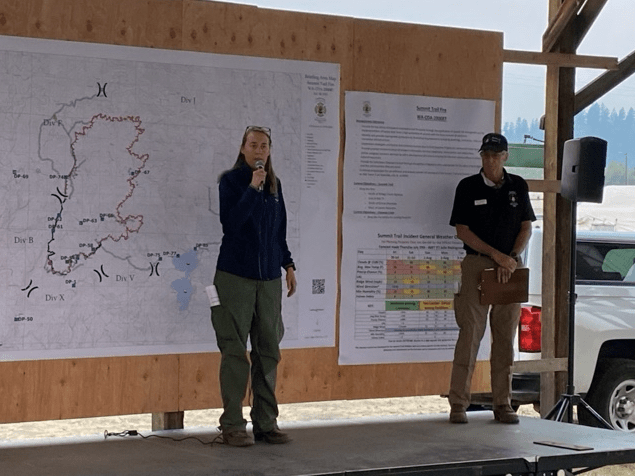
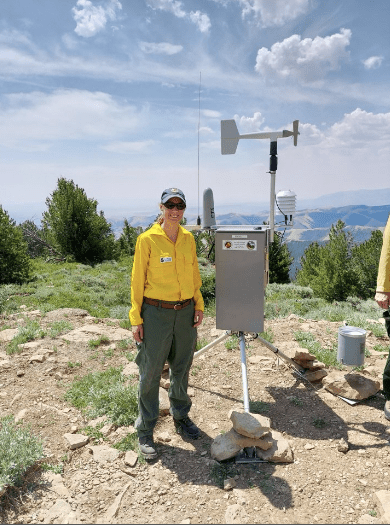
In November 2023, Malingowski assumed the position of Fire Weather Services Coordinator for NOAA’s National Weather Service (NWS). In this capacity, she coordinates training for the National Fire Weather Program, which oversees all government forecasting related to fire weather nationwide, as well as the NWS’ Incident Meteorology program, which comprises 90 certified Incident Meteorologists (IMETs) and over 30 IMET trainees.
“This is my 6th or 7th role with NOAA/NWS, and it’s been fulfilling being a subject matter expert, a coordinator, and a program manager in recent years,” she said.
Malingowski’s primary objective is to equip operational units with cutting-edge tools to better serve the fire weather community.
“My focus is on coordinating training for our National Fire Weather Program due to evolving fire technology and services,” Malingowski explained, adding that “meteorological technology is moving faster than operations can keep up with, and there are a lot of efforts to improve services with the newest technology.”

However, the most gratifying aspect of her role lies in its operational component.
“The most fulfilling part of my position is the operational part, where I get deployed to large wildfires as an IMET,” she said. “When I am on a fire, I am verbally briefing fire crews on the weather, watching observations and radar/satellite tools in real-time while they are on the fireline, and briefing the team for longer-term resource planning.”
Malingowski finds her high-pressure role both exhilarating and daunting.
“Helping leaders with their tactical weather-related operations is terrifying and rewarding at the same time,” Malingowski said.
‘Working as a forecaster is not for the faint of heart’
When asked about lesser-known aspects of meteorology, Malingowski shed light on the challenges of shift work, given the 24/7/365 nature of weather monitoring.
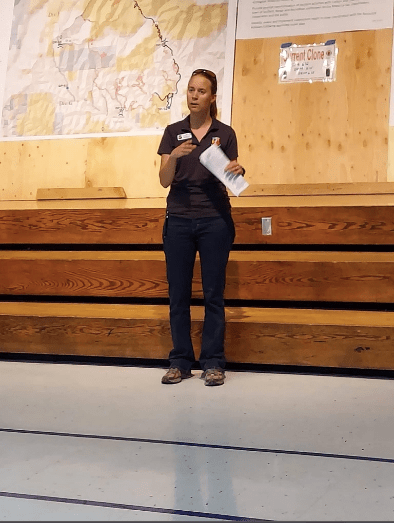
“Working as a forecaster is not for the faint of heart,” she said. “You will work difficult hours no matter who you work for, and it’s really tough to create a community outside of college when you’re working weird hours.”
She also emphasized the importance of soft skills such as communication, negotiation, and management in advancing a meteorologist’s career, particularly if interested in more traditional daytime business hours. While these skills are not typically taught in meteorology curricula, aspiring professionals must proactively seek them out if they aspire to assume leadership roles, she advised.

Always seek to learn as a forever ‘student’
In terms of advice for aspiring meteorologists, Malingowski underscored the importance of perpetual learning and collaboration.
“It’s important to have knowledge, but it’s VERY important to create a community of peers, listen to experience, and work as a team. Listen and learn from your friends and colleagues in school and throughout your career,” she said.
“It’s important to be a ‘student’ forever – if you lose that mentality, you will not grow. As I’ve gotten older, I find myself learning from colleagues of all ages, regardless of their job titles. There are a lot of smart people out there who want to do good, and working together rather than against each other is the recipe for success,” Malingowski added.
‘The world is your oyster’
Reflecting on her career trajectory, Malingowski highlighted the virtue of flexibility.
An undergraduate professor once told Malingowski to be flexible in her career, advising her that she could start her career in one direction and then pivot based on evolving interests. Initially, she was interested in pursuing tropical meteorology and later was drawn to studying the Arctic.
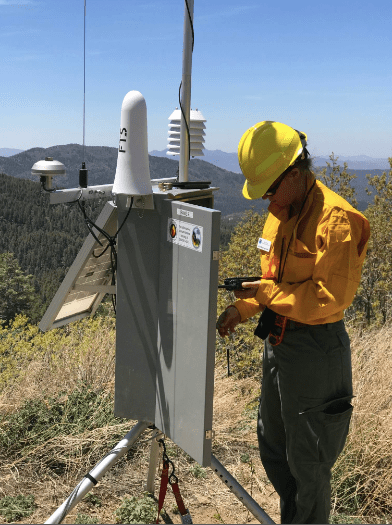
“Don’t ever feel like you’re ‘locked in’ to something,” she said, echoing her professor. Malingowski reflected on how that played out throughout her own career, which has brought her opportunities to storm chase, predict winter weather and fire weather, and work for a short time as a liaison for the NWS. She even held a role where she was deployed for two months a year — for two weeks at a time — with emergency managers responding to disasters across the Western U.S.
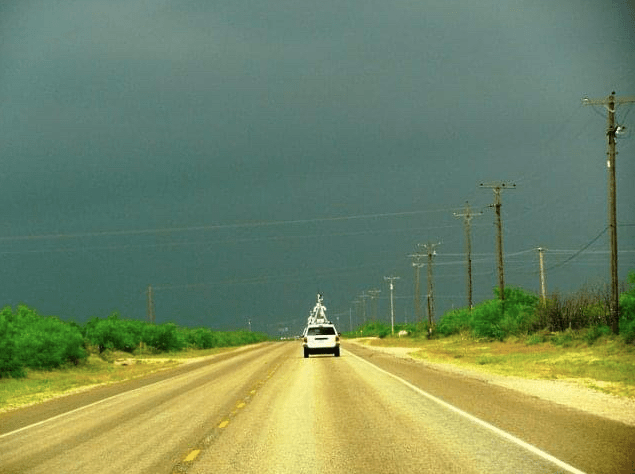
“I have loved every experience, but they aren’t all the same. It’s okay if you want to do the same thing throughout your career, too! The world is your oyster,” she said.
Regardless of the path one chooses, achieving a harmonious work-life balance is imperative, she continued.
“In the field of meteorology, people are VERY passionate about what they do and their work is part of their identity. It’s important to remember that there is life outside of work, and it’s important that you’re happy with what you’re doing.”
In conclusion, Malingowski expressed gratitude to her mentors for their guidance and support throughout her career. “I just want to verbalize my thankfulness for all my previous and current mentors in my career who have provided guidance along the way,” she said.
Indeed, her story epitomizes the resilience and ingenuity of women in meteorology, inspiring a new generation of innovators in the field.
 Meghan Mussoline