
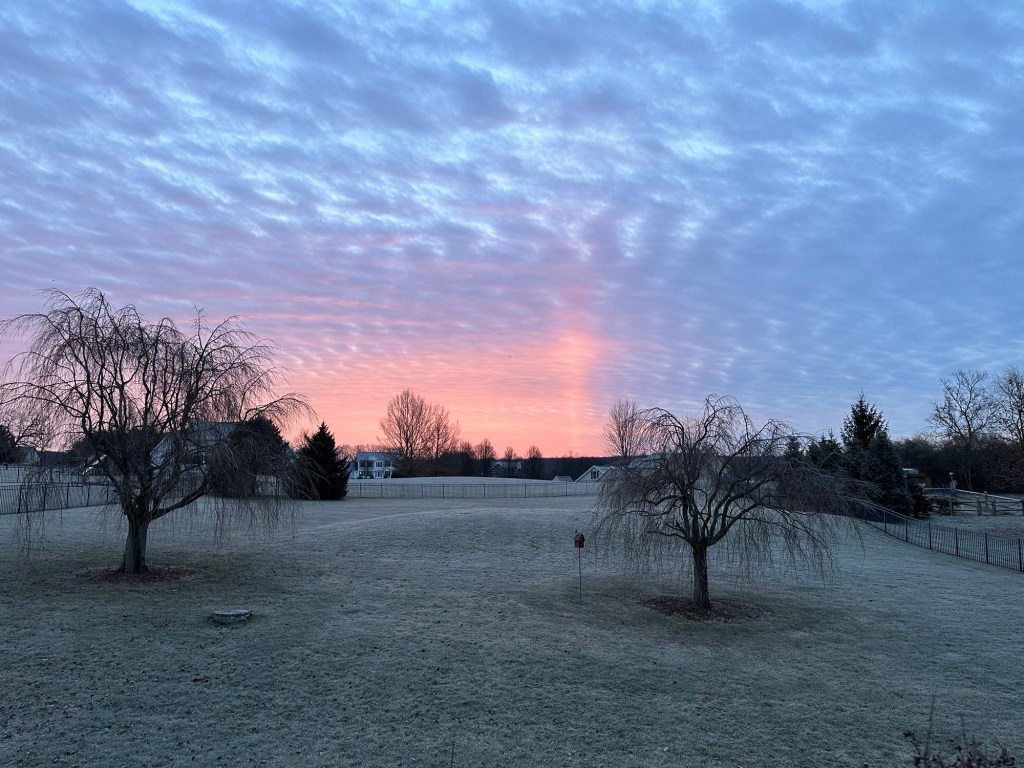
Meteorologists are passionate about what they do, and the seeds of fascination with the weather are often planted at a young age. It’s no wonder since Mother Nature offers awe-inspiring views, and sunrise and sunset make it easy to witness jaw-dropping scenes — sometimes with a surprise to accompany the vivid hues.
The photo above of the sunrise was captured near State College, which is home to Penn State in central Pennsylvania, on Monday morning. Not only was the sky adorned in stunning shades of pink, contrasting with the frosty ground, but there was another feature that made this morning particularly photogenic: a sun pillar.
Essentially, a sun pillar is a vertical column of light, appearing either above or below the sun. That phenomenon occurs due to the reflection of sunlight from falling ice crystals, often associated with high-level clouds, and it is typically visible during sunrise or sunset.
Below are similar phenomena that can be equally eye-catching:
Sundogs

Sundogs are a bright and colorful spectacle appearing in the sky, typically either left or right of the sun — and sometimes on both sides of our closest star. Old Farmer’s Almanac describes them as “rainbows besides the Sun.” They develop when light refracts through ice crystals, often in high-altitude cirrus clouds. Sundogs can often be seen when the sun is lower in the sky like before sunset.
“The colors usually go from red closest to the sun, out to blue on the outside of the sundog,” the National Weather Service (NWS) explains. “Sundogs are also known as mock suns or parhelia, which means ‘with the sun’.”
Crepuscular rays
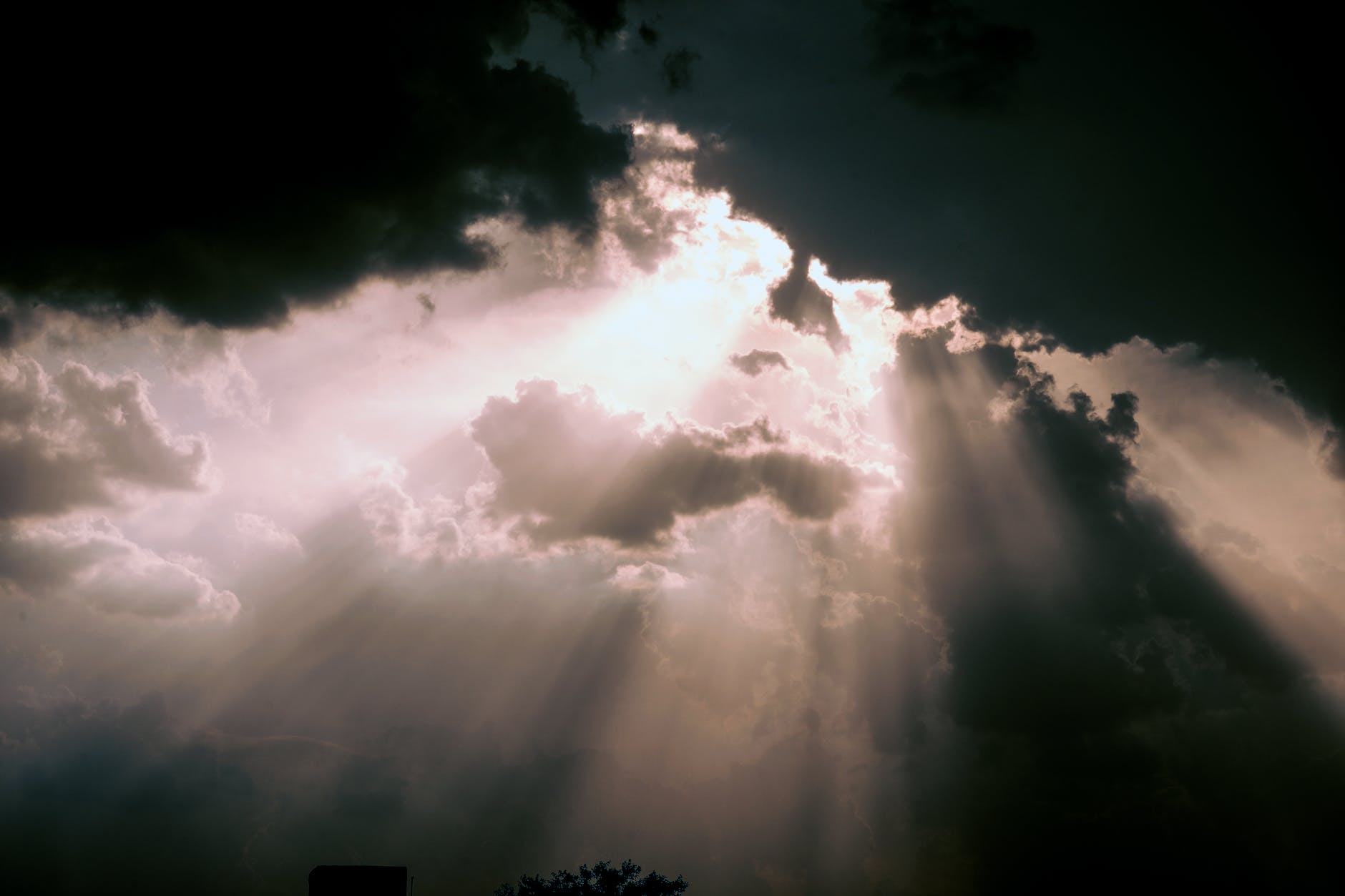
A phenomenon known as crepuscular rays features rays of sunshine, which appear to radiate out from the sun. The bright rays contrast with shadows, creating what one Pinterest user described as “glimpses of heaven.” Quite common, these optics are caused by sunshine peering through clouds.
Halos
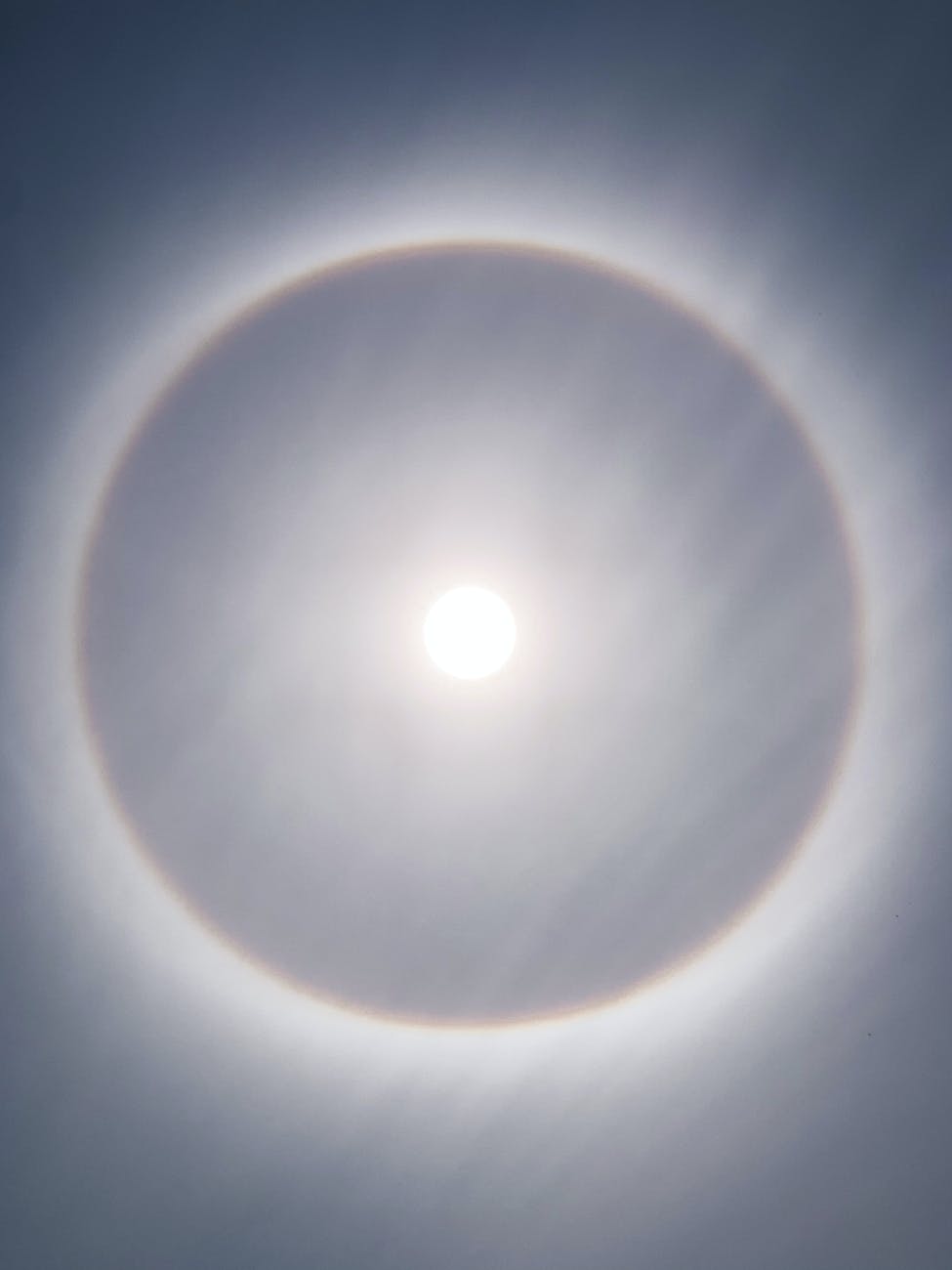
“A halo is a ring or light that forms around the sun or moon as the sun or moon light refracts off ice crystals present in a thin veil of cirrus clouds. The halo is usually seen as a bright, white ring although sometimes it can have color,” the NWS states.
 Meghan Mussoline